


Gallium alloys are used in thermometers as a non-toxic and environmentally friendly alternative to mercury, and can withstand higher temperatures than mercury.Gallium alloy is an ideal basic carrier of temperature-sensitive magnetic fluid and can be used in energy convection, soft robots, microchannels, magnetorheological devices, etc.
Advantages of Gallium Alloys
Melting Point Is Below Room Temperature
When alloyed with indium, the resulting melting point is below room temperature and lowered further when adding tin. Their low melting points have made the gallium alloys alloy family a non-toxic replacement for mercury in applications that require a liquid metal at room temperature.
Low Vapor Pressure
Gallium alloys is also one of the few materials, like water, that expands upon freezing. Unlike toxic mercury, it has low vapor pressure. gallium alloys's high surface tension and low viscosity and other properties make it a material that will likely find many other uses in the future.
Ideal Base Carriers
Gallium alloys alloys are ideal base carriers for temperature-sensitive ferrofluids, which can be used for energy convection, soft robotics, microchannels, magnetorheological devices, etc.
Realize Low Viscosity
Gallium alloys was mixed with different substances (in, sn, zn, ge, and al) to obtain a low melting point, reduce the wetness and adhesion of its alloys, and realize low viscosity.
-

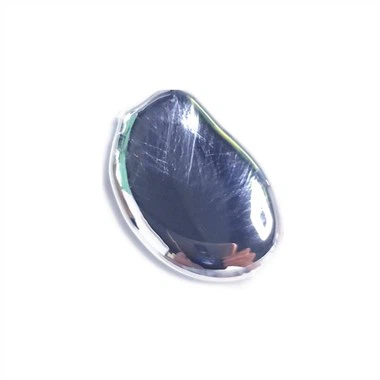
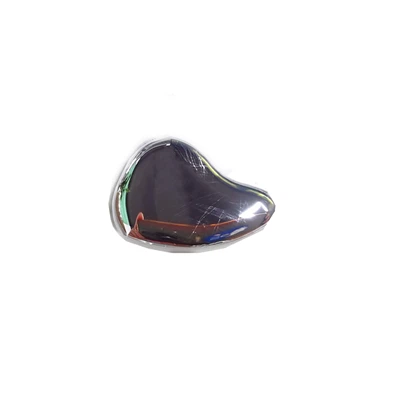
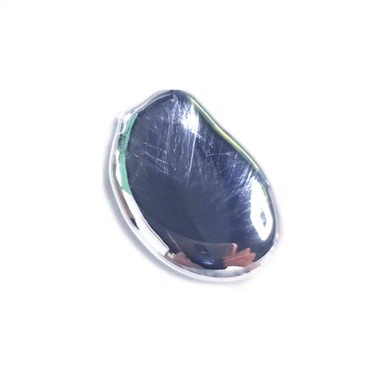
Gallium indium tin alloy is also called galinstan in international. It is liquid at room temperature. As a new non-toxic, non-polluting and low melting point liquid metal, gallium indium (tin) alloy
Add to Inquiry -
Gallium indium alloy is made of gallium and indium,it is liquid at room temperature.
Add to Inquiry -
EGaIn is eytectic gallium indium alloy,silver liquid metal at room temperature
Add to Inquiry -
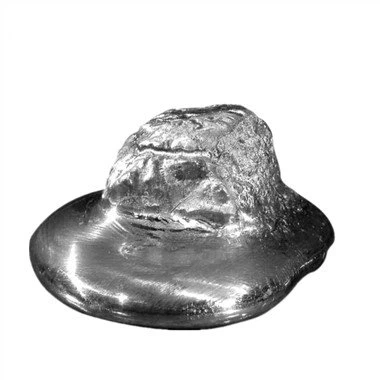
The melting point of gallium is very low, but the boiling point is very high. Pure liquid gallium has a significant tendency to overcool and is easily oxidized in the air to form an oxide film.
Add to Inquiry
Our history
Quanzhou dameiyi shoes co., ltd. Was established in 2010 and is a professional manufacturer of soft leather baby shoes. Small moq is accepted, and oem custom design/logo is also accepted.
Our factory
Quanzhou dameiyi shoes co., ltd. Is a wholly-owned enterprise located in hui'an county, quanzhou city, fujian province, 1 hour drive from jinjiang airport and about 90 minutes drive from xiamen airport. Our factory is a professional manufacturer specializing in soft leather baby shoes, providing oem/odm services for up to 10 years; Small minimum order quantity can be provided. 2000 pairs of baby soft leather shoes can be produced every day. Fast order delivery.
Production market
After years of hard work, we have established long-term cooperative relations with retailers and wholesalers in the uk, the united states, france, germany, finland.
Our services
Our factory provides small MOP and OEM/ODM services. Fast order delivery and high quality baby shoes.
Application of Gallium Alloys
Semiconductor industry
Gallium alloys plays an important role in the semiconductor industry. It is used in the manufacture of high-speed electronic devices, optoelectronic devices and solar cells. Gallium alloys-based semiconductor materials, such as Gallium alloys arsenide (GaAs) and Gallium alloys nitride (GaN), have excellent electrical properties and high-temperature characteristics, which are suitable for the manufacture of high-frequency electronic devices and high-power electronic devices.
LED lighting
Gallium alloys compounds are widely used in the manufacture of LEDs (Light Emitting Diodes). Gallium alloys-based LEDs have the advantages of high efficiency, long life, and energy saving, and are widely used in indoor and outdoor lighting, electronic displays, and automotive lighting.
Alloy preparation
Gallium alloys can form alloys with other metals to improve its characteristics and performance. For example, Gallium alloys alloys are used to make low-melting alloys such as Gallium alloys-indium alloy (often used in thermometers) and Gallium alloys-bismuth alloy (often used in fire alarm devices).
Electronics
Gallium alloys is used in semiconductors, particularly in the production of Gallium alloys arsenide (GaAs) chips, which are essential components in high-frequency applications like mobile phones, microwave circuits, and satellite communications.
Solar Panel0073
Gallium alloys is utilized in thin-film solar cells, offering a lightweight and flexible alternative to traditional silicon-based solar panels.
Alloys
Gallium alloys is often alloyed with other metals to improve their properties. For instance, Gallium alloys-aluminum alloys have low melting points and are used in various applications like soldering and in some thermometers.
Color & physical state
By its nature, Gallium alloys is a kind of soft metal with a blue-white color combination. Apart from mercury, rubidium, and cesium, it is the only metal that turns to liquid at room temperatures, making it possible to be used in thermometers with high temperature.
Vapor pressure
It has a low vapor pressure at all kinds of temperatures and very long liquid range of any metal.
Appearance of Gallium alloys
Pure Gallium alloys has a charming outlook and also silvery.
Stability and reactivity
It can only be attacked gradually by mineral acids.
Other properties of Gallium alloys
Close to what was predicted by scientist mendelev, Gallium alloys has an atomic mass of 69.7 approximately; a boiling point of 2204 degrees, melting point of 29.78 degrees and a density of 5.907g/cm3.

Physical Properties of Gallium Alloys
Gallium alloys is a soft metal with a very shiny surface. Pure Gallium alloys has a silver-blue kind of colour. The elemental or natural form of Gallium alloys is not found in nature. It has to be extracted through smelting or other means. It is hugely different and therefore, not very metal-like. It is soft and can be cut with a knife.
Its melting point is at around 29 degrees Celsius, which is pretty low. Therefore, if your body temperature is above 30 degrees Celsius, a part of it can easily melt in your hands. It is one of the four non-radioactive chemical elements (Mercury, rubidium, and caesium) that are liquid at : room temperature. Gallium alloys sticks to glass or porcelain very easily.
Another interesting feature of the Ga element is that it can supercool. Supercooling is a chemical phenomenon where a substance can cool without solidifying itself below its freezing point. Since the melting point for Gallium alloys is around 29 degrees Celsius, it is probable that it will start to become a solid below 29 degrees. But this is not the case for Gallium alloys. It can supercool itself without becoming a solid and retaining its liquid-like structure. Gallium alloys does not crystallise easily either.
Gallium alloys also has alloying properties that make it easy to alloy with metals like Aluminum and Zinc. It can easily diffuse in the metal boundaries of Zinc, aluminium and steel. One famous Gallium alloys alloy is called the Galinstan that consists of Gallium alloys, tin and indium.
The boiling point for Gallium alloys stands at approximately 2200 degrees Celsius, and its density is 5.907 grams per cubic centimetre which is high like the density of water. It is the only element to have such a great ratio between its melting and boiling point.
What Is the Source of Gallium Alloys
rimary sources
Gallium alloys is typically extracted as a byproduct during the processing of aluminum ore (bauxite) and zinc ore (sphalerite). When these ores are refined, Gallium alloys accumulates in the processing residues, known as red mud for aluminum refining and flue dust for zinc refining. These residues contain small concentrations of Gallium alloys, which can be further processed to extract the metal.
Secondary sources
Recycling is also a significant source of Gallium alloys. As Gallium alloys is used in various electronic and technological applications, such as semiconductors and LEDs, end-of-life products containing Gallium alloys can be recycled to recover the metal. This includes recycling processes for electronic waste (e-waste) and industrial scrap.
Chemical Properties of Gallium alloys
Chemically, Gallium alloys is a fairly reactive element. In contrast to alkali metals, it is not very reactive. Mercury, cesium, and rubidium are the four non-radioactive metals that are liquid at ambient temperature.
Gallium alloys is the only one of these elements which is neither extremely reactive like Caesium and Rubidium nor very toxic like Mercury.
Gallium alloys is somewhat stable in both water and air; however, it interacts with both alkaline and acidic solutions.
Gallium AlloysComposition: Consists of a single gallium atom.
Bond type
In its elemental form, gallium does not have bonds as it is a pure element. However, gallium can form covalent or ionic bonds when reacting with other elements.
Molecular structure
As a pure element, gallium does not form a molecular structure in the same sense as compounds like H₂. At room temperature, gallium is in a metallic state with a close-packed crystalline structure.
Electron sharing
In compounds, gallium typically shares electrons covalently or transfers electrons ionically, depending on the nature of the other element(s) it is bonding with.
Significance
Gallium is notable for its low melting point (29.76°C or 85.57°F) which is close to room temperature, allowing it to melt in one's hand. It is also important for its use in semiconductors, particularly gallium arsenide (GaAs) and gallium nitride (GaN).
Role in Chemistry
Gallium plays a crucial role in the semiconductor industry. It forms a variety of compounds that are essential for electronics, optoelectronics, and photonics, making it a key material in modern technology applications.
Different Types of Reactions of Gallium alloys Alloys
State at room temperature
Gallium alloys is a soft, silvery metal that is solid at room temperature but melts at slightly above, at 29.76°c (85.57°f).
Reaction with air (oxidation)
Gallium alloys forms a protective layer of Gallium alloys oxide (ga₂o₃) when exposed to air, preventing further oxidation.
Formation of Gallium alloys halides
Gallium alloys reacts with halogens to form Gallium alloys halides, such as Gallium alloys(iii) chloride.
Reaction with water
Unlike many metals, Gallium alloys does not react with water at room temperature.
Reaction with acids
Gallium alloys dissolves in mineral acids, producing Gallium alloys(iii) ions and hydrogen gas.
Reaction with alkalis
Gallium alloys also reacts with alkalis to form gallates.
Amphoteric nature
Gallium alloys exhibits amphoteric behavior, meaning it can react with both acids and bases.
Alloy formation
Gallium alloys readily alloys with most metals, significantly lowering their melting points.
Example with indium and tin (galinstan)
No specific equation, but Gallium alloys forms a eutectic alloy, galinstan, that is liquid at room temperature.
Production of Gallium Alloys

Extraction From Bauxite Ore
During the bayer process for refining bauxite to produce gallium alloys (aluminum oxide, al2o3), gallium accumulates in the caustic liquor that remains after the gallium alloys is precipitated out. Gallium is then extracted from this liquor through a series of chemical treatments and electrolysis.
Extraction From Sphalerite Ore
When zinc is produced from sphalerite (zns), gallium is found in the byproducts and is extracted through similar chemical processes involving leaching, precipitation, and electrolysis.
Purification
The gallium extracted through these methods is further purified through processes like zone refining, which involves melting a small section of a long bar of impure gallium and slowly moving it along the bar. The impurities are concentrated in the melt and moved to one end of the bar, leaving behind purified gallium.
Safety Precautions When Using the Gallium Alloys
Low toxicity
Gallium alloys is not toxic to the touch, unlike some other metals like mercury. It is safe to handle with bare hands. However, it is always a good idea to wash your hands after handling any metal.
Skin irritation
Gallium alloys can cause skin irritation in some people, especially if they are sensitive to metals. If you notice any skin irritation or redness after handling Gallium alloys, you should wash the affected area with soap and water.
Staining
Gallium alloys can stain some materials, such as clothing or other fabrics. It is best to avoid contact with materials that you do not want to be stained.
Low melting point
One of the unique properties of Gallium alloys is its low melting point (29.76°C or 85.57°F). This means that it can melt in your hand, which can be a fun and interesting property to explore.
Our History
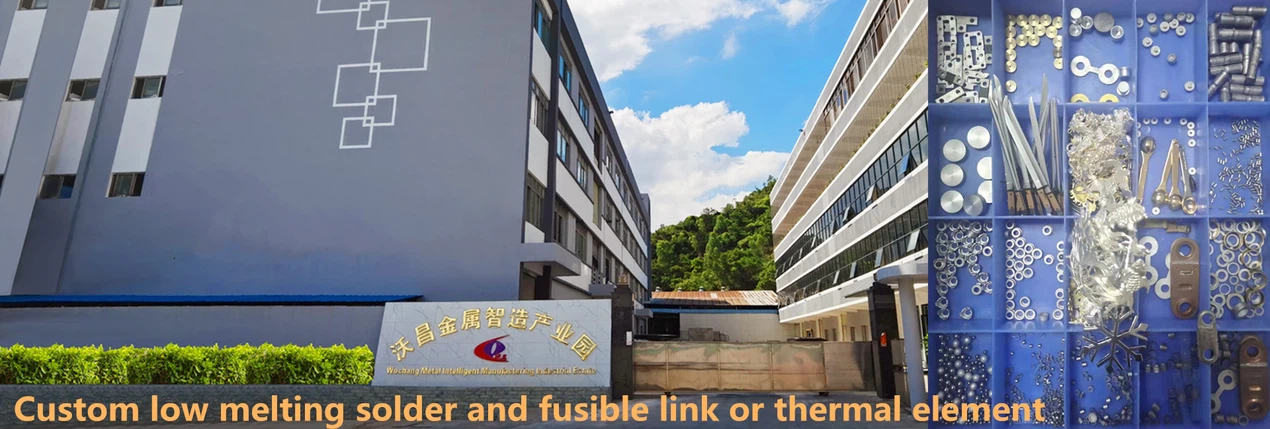
Wochang is located in the world factory-Dongguan,Guangdong which has very developed transportation and various industrial chains. At present, the company has more than 100 employees and a factory area of 15000㎡. And also has a complete production line from alloy smelting to finished product packing.
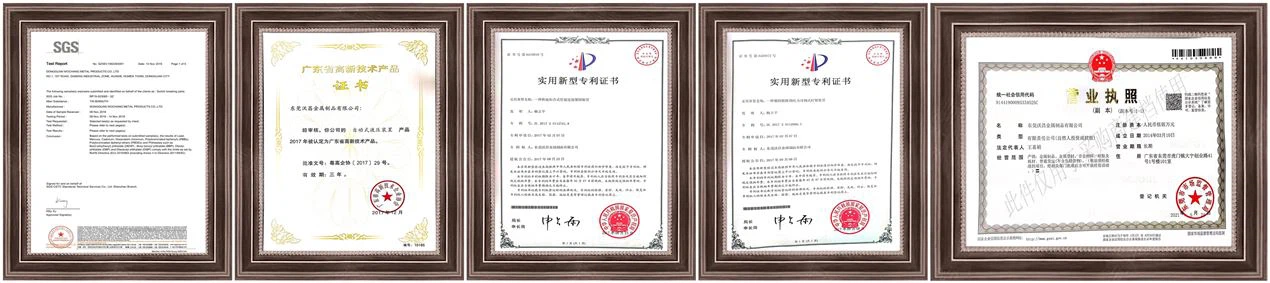
Our Certificates
FAQ
We're professional gallium alloys manufacturers in China, specialized in providing high quality customized products. We warmly welcome you to buy or wholesale high-grade gallium alloys for sale here from our factory. For price consultation, contact us.
high purity gallium metal, eutectic gallium indium liquid metal, gallium alloy