


Bismuth (Bi) is a metal with a somewhat white, pinkish, silvery metallic luster. An interesting fact about bismuth is that once it oxidizes, unique rainbow-like colors appear on its surface (see picture below). This fooled alchemists and led them to mistake it for other precious metals like silver or tin. It was not until the 18th century that bismuth was recognized as its own distinct element. Apart from its colors, what makes this metal exceptional is its low melting point and its expansion upon solidification.
Advantages of Bismuth Alloys
Low Toxicity
Bismuth alloys has low toxicity compared to other heavy metals like lead, mercury, and cadmium. This means that it poses less of a risk to human health and the environment, especially when used in small quantities.
Abundant And Widely Distributed
Bismuth alloys is relatively abundant and widely distributed in the Earth’s crust. This means that it can be mined and extracted without causing significant environmental damage or depletion of natural resources.
Recyclable
Bismuth alloys is a recyclable element, which means that it can be reused and repurposed without requiring additional mining or extraction. This can help to reduce waste and conserve natural resources.
Alternative To Lead
Bismuth alloys is often used as a substitute for lead in various applications, such as in soldering and bullets. Lead is known to be toxic and environmentally hazardous, so using Bismuth alloys instead can help to reduce the negative impact of these industries on the environment.
-

It is a bismuth-based eutectic fusible alloy made of four low-melting metals such as bismuth, tin, lead, and cadmium. It is also called Lipowitz's alloy or by the commercial names Cerrobend,
Add to Inquiry -
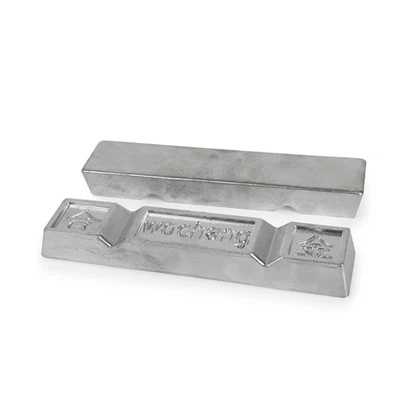
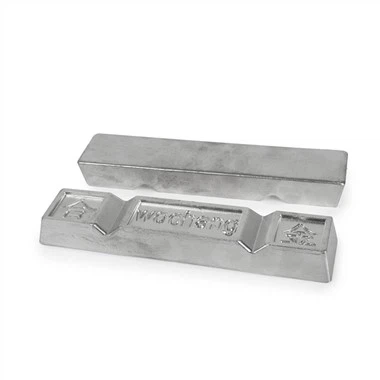
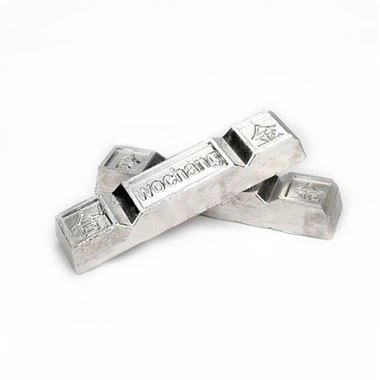
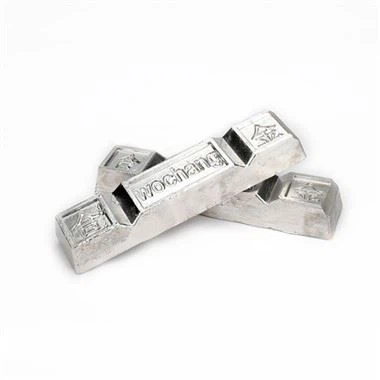
Wood's Metal Bismuth Alloy 70C-76C 158F-169F
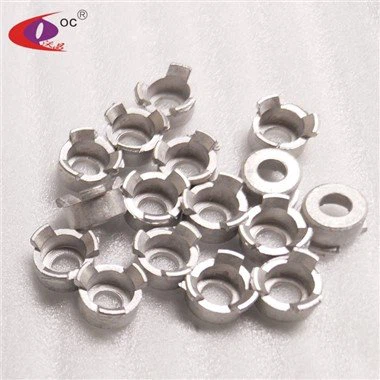
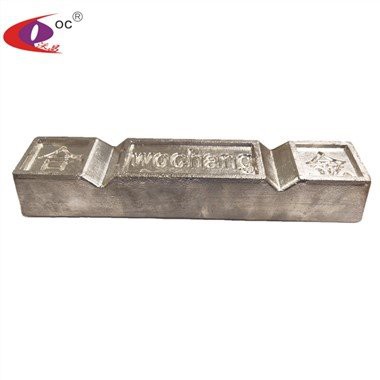
Wood's metal is bismuth based alloy.Wochang customize different shape Wood's metal,fast delivery.
Add to Inquiry -
Custom 70C low melting alloy Wood's metal with different shape.
Add to Inquiry -
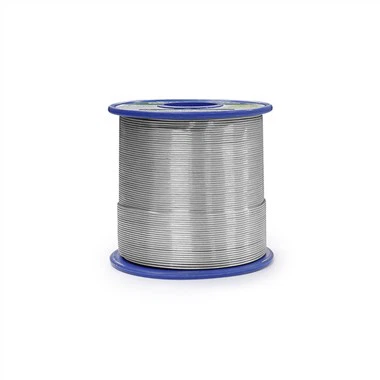
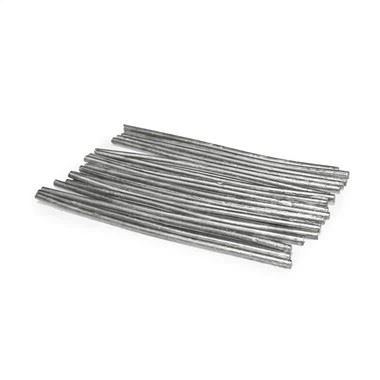
Tin Bismuth Low Temperature Solder Wire Sn42Bi58
Custom low melting point alloy wire from 47℃ to 280℃
Add to Inquiry -
Low Melting Point Alloy Solder
Custom low melting point alloy from 47℃ to 280℃, usually made of low melting point metal elements such as bismuth, lead,tin,cadminum and indium.
Add to Inquiry -
-
Low melting point alloy is also called fusible alloy which is composed of two or more elements in bismuth,tin,lead,cadmium,indium,etc
Add to Inquiry -
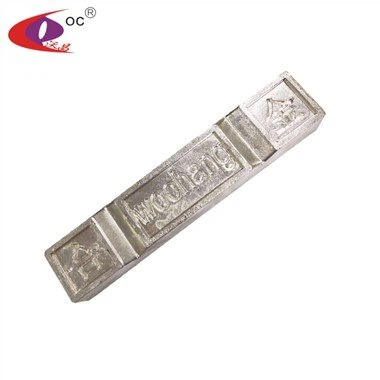
Bismuth Based Low Melt Alloy Solder
Wochang supply the customization service of different shape and ratio.Welcome to contact us!
Add to Inquiry -
117F 47C Bismuth Tin Lead Indium Cadmium Alloy
117F 47C alloy a bismuth-based eutectic fusible alloy made of five low-melting metals such as bismuth, tin, lead, indium and cadmium. It has a low melting point, can be melted in hot water, is easy
Add to Inquiry -
136F 58C Bismuth Tin Lead Indium Alloy
It is a bismuth-based eutectic fusible alloy made of four low-melting metals such as bismuth, tin, lead, and indium, without cadmium. It has a low melting point, can be melted in hot water, is easy
Add to Inquiry -
174F 79C Bismuth Tin Indium Alloy
Fusible alloy is also called low melting point alloy which is composed of two or more elements in bismuth, tin, lead, cadmium and indium.
Add to Inquiry -
It is a bismuth-based eutectic fusible alloy made of three low-melting metals such as bismuth, tin and lead. It has a low melting point, easy to recycle and can be reused many times.
Add to Inquiry



Why Choose Us
Melting Point Is Below Room Temperature
When alloyed with indium, the resulting melting point is below room temperature and lowered further when adding tin. Their low melting points have made the gallium alloys alloy family a non-toxic replacement for mercury in applications that require a liquid metal at room temperature.
Low Vapor Pressure
Gallium alloys is also one of the few materials, like water, that expands upon freezing. Unlike toxic mercury, it has low vapor pressure. gallium alloys's high surface tension and low viscosity and other properties make it a material that will likely find many other uses in the future.
Ideal Base Carriers
Gallium alloys alloys are ideal base carriers for temperature-sensitive ferrofluids, which can be used for energy convection, soft robotics, microchannels, magnetorheological devices, etc.
Realize Low Viscosity
Gallium alloys was mixed with different substances (in, sn, zn, ge, and al) to obtain a low melting point, reduce the wetness and adhesion of its alloys, and realize low viscosity.
Bismuth-based alloys
An important property is that when they melt and then re-solidify, they can expand by up to 3.3%. Typically, bismuth-based low-melting-point alloys contain about 40-55% bismuth, with the higher the bismuth content, the higher the expansion. This makes bismuth-based alloys ideal for precision casting, as the material pushes further into the gaps of the mold as it expands, making it less likely to leave voids in the finished product. Its low melting point also means that molds can be made from a wider range of materials. Bismuth is also less toxic than some other low-melting-point alloying metals, especially cadmium and lead. Here are some common types of bismuth-based alloys and their uses.
Wood's alloy
Contains bismuth, tin, lead, and cadmium. Wood's alloy is a non-eutectic alloy with a melting point between 70-76 °C. This bismuth-based alloy is often used for welding and casting. Its extremely low melting point means it can be cast on wood to make metal inlays and used to restore antiques, repairing items without causing further damage. It is also used as a filler when bending metal pipes. The tube is filled with Wood's metal, which prevents the tube from collapsing when it is bent, and the Wood's metal then melts out. Wood's metal is also commonly used in fire sprinkler systems. Due to its low melting point, the Wood's metal in the valve will melt in a fire, triggering the sprinklers.
Rose gold
Contains bismuth, lead, and tin. Like Wood's metal, rose gold is about 50% bismuth and is a non-eutectic metal, but has a slightly higher melting point of about 95-98°C. Rose gold has many of the same uses as Wood's metal, but is safer because it contains no cadmium. It is also slightly more cost-effective. Rose gold is primarily used as a solder, but is also used in artistic casting because it does not shrink when it cools.
Field's metal
This alloy is eutectic and has a melting point of about 62°C. Field's metal has less bismuth than the other metals, and indium makes it much more expensive, but is sometimes preferred because it does not contain the toxic metals lead and cadmium. It is often used for die casting and rapid prototyping, and is sometimes used to cast small parts for jewelry.
Application of Bismuth Alloys
One of the most common is that it's used a lot in fire suppression. If you see the sprinkler systems in public buildings, there's actually a little piece of a bismuth alloy metal in there that melts at something like 117 Fahrenheit, so that if a fire breaks out in the building, that warms up and it melts, it releases the valve, and the water comes out. It's used in many thermal applications like that; whenever you have to something that, when it gets to a certain temperature, it needs to stop working or something needs to happen. We call them thermal fuses, thermal links, things like that. If you've ever seen a magician and he has his magic spoon, and he's rubbing the spoon, and then you see it slowly droop over and melt, that's because it's not made out of stainless steel like a real spoon. It's made out of a low-temperature bismuth alloy, and his body heat is enough to get it to kind of soften so that it will, not totally melt, but will kind of droop over.
It's also used a lot in fixturing application, because it does expand when it solidifies. You can put it in an enclosed container and put something else inside of there, and pour it in when it's liquid, and, when it solidifies, it will expand and grip onto whatever it's in contact with.
One of the things that is also done with low-temperature alloys of bismuth is this thing called tube bending. If you've ever taken a copper tube, or any sort of metal tube, and you try to bend it, it will kink. One of the things that you can do is you can take that tube, you can fill it with one of these low-temperature bismuth alloys, and bend it to shape. The alloy inside the tube will prevent it from kinking, and then you can take that tube and put it in some sort of hot medium, even like boiling water, which would be above the melting point of the alloy, and that alloy would flow out and you'd have your tube.
It's also used for grinding of lenses, like in glasses. The lens is actually kind of cast into the low temperature alloy, and then it can grind it. It's also used in many soldering applications for soldering things like LEDs to a substrate. LEDs, some of them anyways, are temperature sensitive. If you've got them up to a soldering temperature, like with a normal solder, you can actually damage the LED.
Aluminum
Aluminum is a lightweight non-ferrous metal with good corrosion resistance, ductility, and strength. Typical alloying elements of aluminum include copper, magnesium, manganese, silicon, and zinc. Other elements that can be alloyed with aluminum include nickel, tin, vanadium, molybdenum, chromium, titanium, antimony, bismuth, boron, calcium, and cobalt.
Iron
Iron is a soft, magnetic metal. It can be alloyed with varying amounts of carbon to make steel. In addition to carbon, commonly added alloys include manganese, chromium, molybdenum, vanadium, tungsten, cobalt, silicon, and nickel. Other elements that can be alloyed with iron include titanium, copper, calcium, rare earth metals, zirconium, niobium, selenium, tantalum, sulfur, phosphorus, and nitrogen.
Cobalt
Cobalt is a non-ferrous magnetic metal with high strength and toughness, excellent corrosion and oxidation resistance, and high-temperature strength. Common alloying elements added to cobalt include chromium, nickel, molybdenum, iron, tungsten, aluminum, manganese, silicon, and titanium. Other elements that can be alloyed with cobalt include vanadium, boron, sulfur, boron, carbon, and phosphorus.


Copper
Copper is a soft, conductive, non-ferrous metal with good corrosion resistance, ductility, and strength. Major copper alloys include zinc (brass alloys), tin (bronze alloys), aluminum, nickel, tungsten, gold, silver, and manganese. Other alloys of copper include lead, arsenic, antimony, bismuth, chromium, cobalt, iron, magnesium, silicon, phosphorus, titanium, vanadium, and zirconium.
Magnesium
Magnesium is a low-density, non-ferrous metal with good ductility, moderate strength, and good corrosion resistance. Major magnesium alloys include aluminum, zinc, copper, silver, and zirconium.
Molybdenum
Molybdenum is a refractory metal with an extremely high melting point and relatively high density. As a base metal, molybdenum is commonly alloyed with titanium, zirconium, and carbon. It can also be alloyed with tungsten.
Nickel
Nickel is a non-ferrous metal with high strength and toughness, excellent corrosion resistance, and excellent high-temperature properties. Typical nickel alloys include chromium, copper, aluminum, manganese, molybdenum, silicon, iron, zinc, silicon, cobalt, and magnesium. Other possible alloys of nickel include tungsten, titanium, carbon, niobium, phosphorus, tantalum, lanthanum, boron, and calcium.
Titanium
Titanium is a nonferrous metal with excellent corrosion resistance, good fatigue properties and a high strength-to-weight ratio. Elements in titanium-based alloys typically include aluminum, tin, molybdenum and vanadium, and can also include chromium, manganese, selenium, iron, silicon, niobium, tantalum, zirconium and nitrogen.
Zinc
Zinc is a low-iron metal with a moderate melting point that is widely used in the production of die-cast components. The main alloying elements of zinc include aluminum, tin, magnesium, copper and iron. Other possible alloying elements are lead, cadmium, silicon, cerium, antimony, cobalt, titanium and vanadium.
The Formation of Bismuth Alloys Compounds
Bismuth alloys is typically formed in the presence of other minerals, such as copper, tin, lead, silver, and gold. These minerals and their metal ores contain trace amounts of bismuth alloys, which is acquired as a byproduct of the extraction process. The bismuth alloys found in these ores most often appears in the form of bismuth alloys minerals. Some of the most common bismuth alloys minerals found in nature are bismuth alloysinite, bismutite, bismuth alloys ochre, and bismutosphaerite.
Another factor that influences the formation of bismuth alloys is the presence of sulfide minerals. Sulfides, such as bismuth alloys sulfide, are important components in the formation of bismuth alloys, and their presence can have a significant impact on the way this metal is formed. Sulfides are typically found in hydrothermal veins, which are created when hot, mineral-rich fluids circulate through the earth’s crust. These veins can contain high concentrations of bismuth alloys, which is why bismuth alloys sulfide minerals are the primary form in which bismuth alloys metal is found.
Physical Properties of Bismuth Alloys
Bismuth alloys has an atomic number of 83 and is a white with pinkish hint in appearance belonging to the post-transition group of metal. It has a melting point of 271.5 °c (520.7 °f) and a boiling point of 1564 °c (2847 °f).
Bismuth alloys is one of the few elements that is denser in liquid form than in solid form. It has a solid phase density of 9.78 g/cm3 and a liquid or molten phase density of 10.05 g/cm3.
Bismuth alloys is the most naturally diamagnetic of all metals, which means it resists magnetization and is repelled by magnetic fields.
Bismuth alloys also has an extraordinarily high electrical resistance for a metal.
Bismuth alloys has poor heat conductivity. It has the lowest heat conductivity of any metal except mercury.
Bismuth alloys has the peculiar feature of expanding when it freezes, similar to water. Other elements that expand when frozen include silicon, gallium, antimony, and germanium.
In normal conditions, bismuth alloys has a rhombohedral lattice structure. However, compression changes its structure so it is monoclinic at 2.55 gpa, tetragonal at 2.7 gpa, and body-centered cubic at 7.7 gpa.
Chemical Properties of Bismuth Alloys
The metal is resilient in oxygen and water. It does not change color when exposed to air and generates an insoluble compound when immersed in water.
At boiling point, the element oxidizes fast and creates an oxide covering. This coating is a bright yellow.
Bismuth alloys interacts with halogens to create Bismuth alloys (III) halides. It also forms a +5 oxidation state compound with fluorine, Bismuth alloys(V) fluoride.
While this element is rather inert, it interacts strongly with both dilute and concentrated nitric acid. When Bismuth alloys (III) nitrate, nitric oxide, and water are mixed, they generate Bismuth alloys (III) nitrate. It is sensitive to hydrochloric acid, nitric acid, and sulfuric acid.
Our History
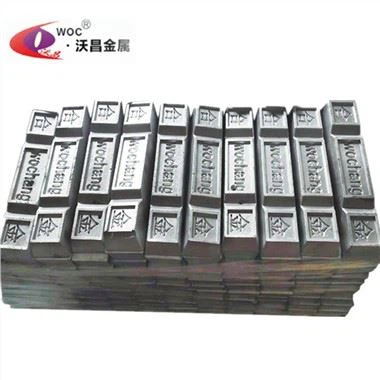
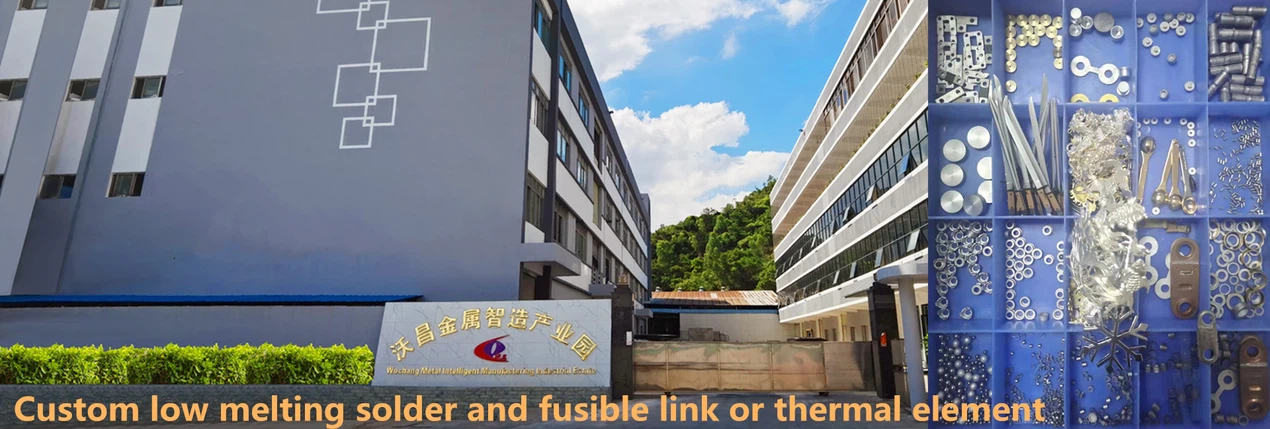
Wochang is located in the world factory-Dongguan,Guangdong which has very developed transportation and various industrial chains. At present, the company has more than 100 employees and a factory area of 15000㎡. And also has a complete production line from alloy smelting to finished product packing.
Our Certificates
FAQ
We're professional bismuth alloys manufacturers in China, specialized in providing high quality customized products. We warmly welcome you to buy or wholesale high-grade bismuth alloys for sale here from our factory. For price consultation, contact us.
low melt metal for casting, SnBiPb alloy, sn42bi58 low temperature solder wire