


Low-melting alloys, also known as fusible alloys, have a composition that allows the metal to form a liquid or semi-liquid state at low temperatures and then resolidify. These low-melting point alloys are ideal because they allow parts to be joined or cast at temperatures below 300 degrees. It is widely used in salts (pharmaceuticals, cosmetics, enamels) and metallurgy along with other metals. The alloys formed by bismuth with lead, tin, cadmium and antimony usually have a melting point of less than 100 °C: They are high-specific and highly fluid alloys. They have almost no coagulation shrinkage and a low coefficient of expansion. They are used for welding, preparing molds, making impressions, installing punches and dies, building safety valves, producing printed characters, and being used as hardening baths.
Advantages of Low Melting Point Alloys
Improved properties
Low melting point alloys are created by mixing two or more metals or a metal and a non-metal to enhance specific properties like strength, corrosion resistance, or electrical conductivity. By carefully selecting the composition of the alloy, manufacturers can create materials that are better suited for the specific requirements of electric toasters and heaters.
Melting point control
While some Low melting point alloys may have lower melting points compared to pure metals, the melting point of an alloy can be engineered to be higher than the operating temperatures of toasters and heaters. This ensures that the material remains solid and retains its structural integrity during normal use.
Cost-effectiveness
Low melting point alloys can be more cost-effective than using pure metals. By combining different metals, manufacturers can create materials that offer the desired properties at a lower cost than using pure metals.
Corrosion resistance
Many Low melting point alloys offer improved corrosion resistance compared to pure metals. This is important for appliances like toasters and heaters that may be exposed to moisture or other corrosive elements during their lifetime.
Ease of manufacturing
Low melting point alloys can often be easier to work with during the manufacturing process compared to pure metals. They may have better machinability, formability, or weldability, which can make them more suitable for mass production of appliances like toasters and heaters.
Specific properties
Some Low melting point alloys have properties that are particularly well-suited for electrical applications, such as good electrical conductivity or magnetic properties. These properties make them ideal for use in electric toasters and heaters where electrical currents are involved.
-

It is a bismuth-based eutectic fusible alloy made of four low-melting metals such as bismuth, tin, lead, and cadmium. It is also called Lipowitz's alloy or by the commercial names Cerrobend,
Add to Inquiry -
Field's metal or Field's alloy is a indium-based eutectic low melt alloy made of three low-melting metals such as indium, tin and bismuth.
Add to Inquiry -
Tin lead alloy is a tin-based eutectic low melt alloy made of two low-melting metals such as tin and lead. It has a low melting point, easy to recycle and can be reused many times.
Add to Inquiry -
Gallium indium tin alloy is also called galinstan in international. It is liquid at room temperature. As a new non-toxic, non-polluting and low melting point liquid metal, gallium indium (tin) alloy
Add to Inquiry -
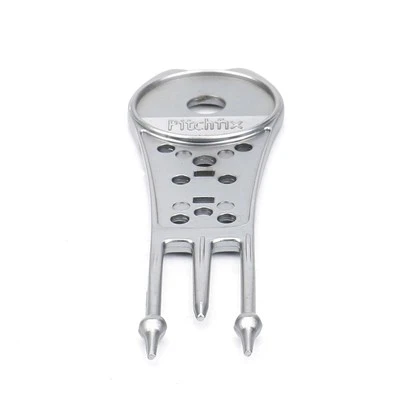
Dongguan Wochang Supply the customization and processing service of golf divot tool according to drawing or sample.Factory supply directly,welcome to contact us if you have any interest.
Add to Inquiry -
Wood's Metal Bismuth Alloy 70C-76C 158F-169F
Wood's metal is bismuth based alloy.Wochang customize different shape Wood's metal,fast delivery.
Add to Inquiry -
Custom Eco-friendly eutectic indium bismuth alloy which melting point is 72C.
Add to Inquiry -
Gallium indium alloy is made of gallium and indium,it is liquid at room temperature.
Add to Inquiry -
Low melting point alloys refer to metals and its alloys with a melting point below 300℃. They are usually composed of low -melting point metal elements such as BI, SN, PB, and IN. These alloys are
Add to Inquiry -
Tin bismuth solder is composed of two and above element systems, that is, the diverse tin -bismuth alloy solder is the direction of future development. In addition to the improvement of the
Add to Inquiry -
Custom 70C low melting alloy Wood's metal with different shape.
Add to Inquiry -
Eutectic Solder Indium Tiny Alloy
Wochang supply eutectic indium tin solder,melting point 117 ℃,any shape can be available.
Add to Inquiry

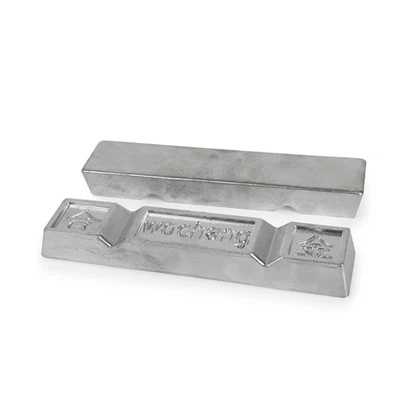

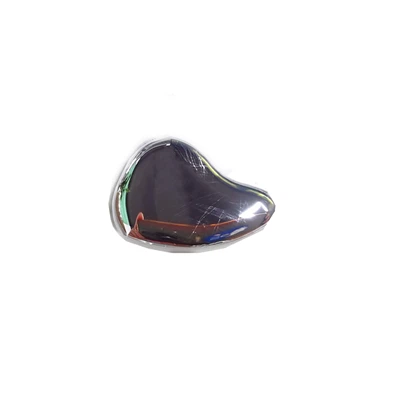
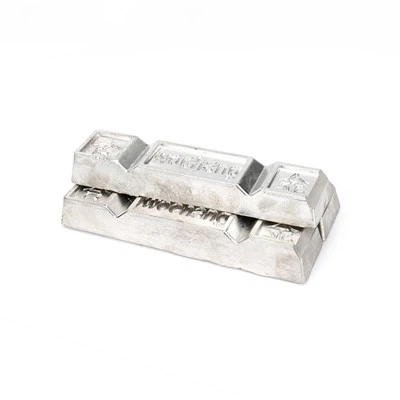
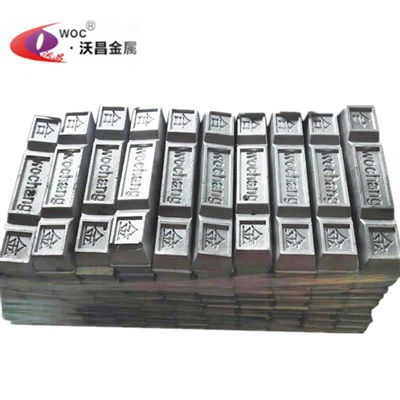

Why Choose Us
Factory Area
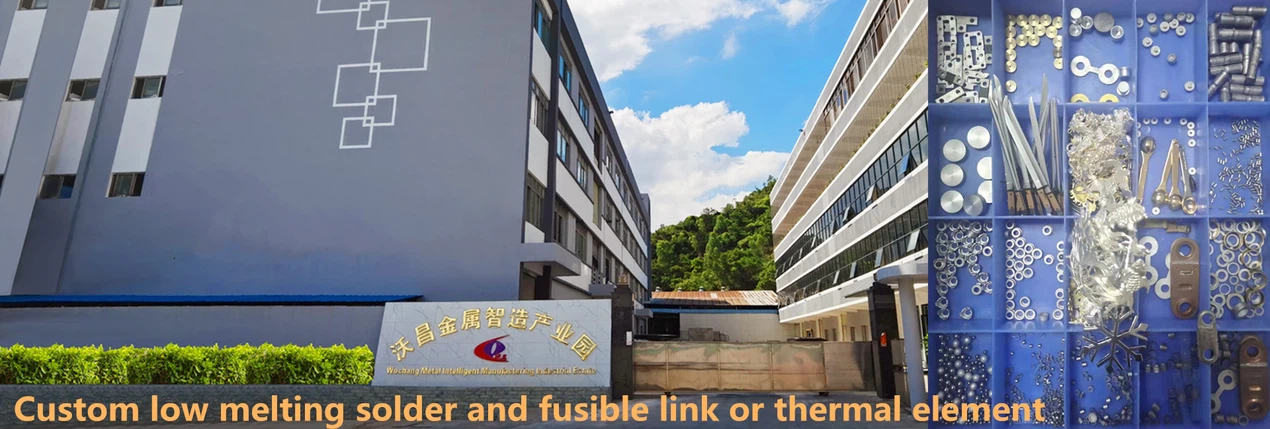
At present, the company has more than 100 employees and a plant area of 15,000 square meters.
Main Products
Jewelry accessories, handicrafts, jewelry boxes, perfume bottles, hardware accessories...
OEM Solutions
Accept customization of various proportions and shapes.
After-sales Service
Adhere to the principle of quality first, customer first.
Tin-based
Pewter is one common tin-based low melting alloy that is used. There will normally be a composition base where there will be about 50% tin element in the alloy. Manufacturers select tin due to its malleability when they require a metal that has a ductile characteristic, as it can be molded and shaped without becoming brittle.
Bismuth-based
Bismuth alloys will have a composition that is less of a ductile characteristic than tin, as it can become brittle. Manufacturers use bismuth due to its expansion qualities when it melts and then solidifies as it can expand to up to 3.3%. The more bismuth is in an alloy, the more it expands. It is less expensive than other alloys that are featured and the least toxic as it can be used in applications where there is drinking water present.
Indium-based
Indium alloys can be used when bonding onto gold, glass and ceramic surfaces as well as other materials. It can also weld onto itself and has the ability to wet surfaces that are non-metallic as well as metallic. When looking for a ductile element that offers fantastic fatigue resistance and a variety of low melting points, manufacturers may select indium alloys for their applications.
Gallium-based
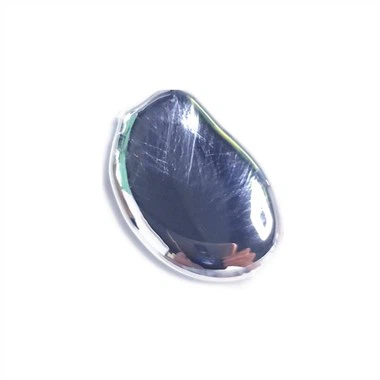
Due to its extremely low melting point, gallium-based alloys have the ability to melt when held in a person’s hand. It changes into a liquid at room temperature, as manufacturers will often use it for thermal management applications. It can also be used to wet on nonmetallic and metallic surfaces including glass and porcelain. Like bismuth, gallium can become dense and brittle when solidifying.
Pipe bending
If you have ever bent a pipe you will recall that an unsupported pipe will wrinkle and kink when it is formed. It is fairly common to fill a pipe with a low temperature alloy before bending to support the pipe from within. When the pipe is successfully bent, the low temperature alloy can be dipped into warm water to liquefy the alloy and remove it from the pipe.
Blocking / fixturing
A temporary mounting point is sometimes needed to hold a part while it is machined. Low temperature alloys can be cast onto a part and removed after processing with low heat, perhaps in the form of a heat gun or hot water.
Compressible thermal interface
Some components do not need an actual solder joint to connect them thermally to a heat spreader or heat-sink. If the device and passive radiator are already mechanically coupled with a clamp, a piece of indium can proved thermal transfer. The material is not melted in a compression interface, so it is not a solder application.


Thermal fuses
As the name suggests, these lower melting point alloys turn to a liquid at specific temperatures, which make them great fuses. Imagine a plug for an oil pan made from an alloy that melts at 118°c. If the oil in the pan reaches 118°c (which may be a safety threshold), the alloy would melt and let the oil escape from the pan. It could also be used to trigger other events. Once popular uses for thermal fuses include turkey timers and sprinkler heads.
Liquid at operating temperature
When selecting a liquid metal for use at room temperature, there are two categories: Mercury and gallium/indium alloys. If the application calls for a liquid metal, and it is not compatible with gallium (uncoated aluminum for instance), and the operational temperature will be sufficiently high, some of the fusible alloys may work for the application. I know this is a strange set of conditions, but we see a lot of strange applications!
Low temperature casting
These alloys can be re-casted and very low temperatures, making them very easy to work with. In addition, most fusible alloys have interesting growth/shrinkage patterns.
Why Use Low Melting Point Alloys for Casting?
Traditional casting involves pouring a metal into a mould and creating a solid cast from it. However, creating the mould in the first place is a difficult job, since the material used must be able to withstand the heat of the metal being poured into them, and can often be difficult and expensive to manufacture in the first place. Advances in 3D printing have sought to remedy this with intricate moulds made from plastic, but these would liquefy under the extreme temperatures of most molten metals. By using low melting point alloys for casting, you can sidestep this issue and produce clean, detailed casts for components and tools every time.
Material of Low Melting Point Alloys
Tin-lead solder
Traditionally, the most common type of solder is a blend of tin and lead, which was prized for its low melting point and reliable performance.
Lead-free solder
In response to health and environmental concerns about lead, lead-free solders have become increasingly common. These often incorporate metals like silver, copper, and bismuth.
Bismuth-based solder
Bismuth-based solders have particularly low melting points, making them ideal for heat-sensitive applications.
Crystal structure
Low melting point alloys often have a different crystal structure compared to pure metals. When different metals are mixed to form an alloy, the crystal structure can change, leading to weaker bonds between atoms. Weaker bonds can result in a lower melting point because less energy is required to break these bonds and change the material from a solid to a liquid.
Impurities
Low melting point alloys can contain impurities or foreign atoms that disrupt the regular arrangement of atoms in the crystal lattice. These impurities can act as defects in the crystal structure, making it easier for the material to transition from a solid to a liquid state, thus lowering the melting point.
Solid solution
Low melting point alloys are often solid solutions of two or more metals. In a solid solution, atoms of the different elements are mixed together in the crystal lattice of the alloy. This mixing can disrupt the regular arrangement of atoms and make it easier for the material to melt.
Eutectic low melting point alloys
Some low melting point alloys are eutectic mixtures, which have a specific composition that melts at a lower temperature than any of the individual components. Eutectic low melting point alloys have a unique crystal structure that results in a lower melting point compared to the pure metals that make up the alloy.
Thermodynamic factors
The formation of an alloy can result in changes in the thermodynamic properties of the material, such as the enthalpy of mixing. These changes can affect the melting point of the alloy, making it lower than that of the pure metal.
Melting Point of Low Melting Point Alloy
Aluminum melts at 1,220 degrees Fahrenheit. Carbon steel melts between 2,600 and 2,800 degrees Fahrenheit, while melting tungsten requires temperatures all the way up to 6,150 degrees Fahrenheit. Specialized furnaces are needed to reach these temperatures, so when the alloy melts in boiling water or begins to liquefy at room temperature, it looks like magic.
Alloys with melting points below 450 degrees Fahrenheit are called low-melting or fusible alloys. The most widely used fusible alloys contain a high percentage of bismuth, along with lead, tin, cadmium, indium, and other metals. Bismuth affects the melting point as well as the alloy's growth and shrinkage characteristics. Many bismuth-based alloys melt below the boiling point of water, with some melting below 150 degrees Fahrenheit.
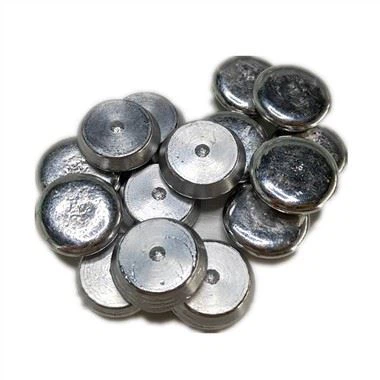
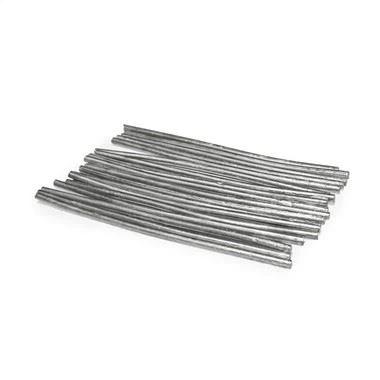
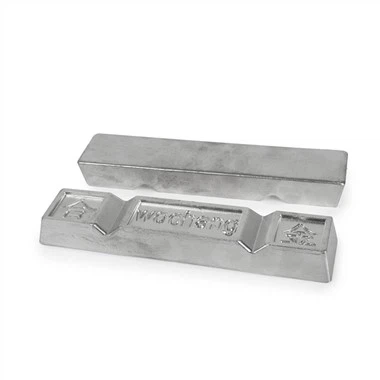
Fusible alloys are stable and can be divided into eutectic and non-eutectic alloys. Eutectic alloys have the lowest melting point, meaning the temperature at which the material is solid equals the temperature at which the material is liquid. Non-eutectic alloys begin to melt at a certain temperature, then become viscous, and then completely melt at a higher temperature. Low melting point alloys are available in a variety of forms: blocks, ingots, rods, pellets, wires, bars, strips, and custom shapes.
Safety Precautions When Using the Low Melting Point Alloys
Personal protective equipment (ppe):
- Wear heat-resistant clothing such as leather gloves, aprons, and closed-toe shoes to protect yourself from burns.
- Wear goggles or a face shield to protect your eyes from splashes and fumes.
- Consider wearing a heat-resistant jacket or coat to protect your arms and torso.
Ventilation:
- Make sure you work in a well-ventilated area to prevent the accumulation of fumes from the molten metal.
- Avoid working in enclosed spaces where fumes may accumulate.
Fire safety:
- Keep a fire extinguisher nearby and know how to use it in case of a fire.
- Carry a bucket of sand or a fire blanket with you to put out any potential fires.
- Do not pour molten metal near flammable materials.
Stable work surface:
- Use a stable, level work surface to place the mold during pouring to prevent spills and accidents.
- Make sure the work surface is heat-resistant to avoid damage.
Handling molten metal:
- Use appropriate tools such as tongs or a spoon to handle the crucible containing the molten metal.
- Do not touch molten metal with bare skin.
- When pouring molten metal into the mold, be careful of splashes and spills.
Preparation:
- Before you begin the pouring process, prepare all necessary equipment and materials.
- Plan your movements and steps in advance to minimize the risk of accidents.
Emergency plan:
- Have a plan for what to do in the event of an accident or injury.
- Make sure you have access to a phone or a way to get help if needed.
Training and experience:
- If you are new to working with molten metal, consider seeking guidance from someone with experience or taking a metal casting class.
- Practice safe handling techniques and start with smaller projects before attempting larger pours.
What Are the Trends and Development Directions of Low Melting Point Alloys in the Market
Technological advancements
The market is driven by continuous technological innovations that enhance the efficiency and effectiveness of low melting point alloys (lmpa) products and services. This includes advancements in materials, manufacturing processes, and digital technologies.
Growing demand
The increasing demand for low melting point alloys (lmpa) products and services, driven by factors such as population growth, urbanization, and changing consumer preferences, is a significant driver for market growth.
Regulatory support
Favorable government policies, regulations, and incentives that promote the use of low melting point alloys (lmpa), such as subsidies for renewable energy projects and carbon pricing mechanisms, encourage market growth.
Environmental awareness
Rising awareness about environmental sustainability and the need to reduce carbon emissions is driving the adoption of low melting point alloys (lmpa) solutions, particularly those that are eco-friendly and renewable.
Cost reduction
Continuous cost reductions in the production and installation of low melting point alloys (lmpa) solutions, driven by economies of scale, technological advancements, and increased competition, are making these solutions more affordable and accessible.
Our History
Wochang is located in the world factory-Dongguan,Guangdong which has very developed transportation and various industrial chains. At present, the company has more than 100 employees and a factory area of 15000㎡. And also has a complete production line from alloy smelting to finished product packing.
Our Certificates
FAQ
We're professional low melting alloys manufacturers in China, specialized in providing high quality customized products. We warmly welcome you to buy or wholesale high-grade low melting alloys for sale here from our factory. For price consultation, contact us.
